The Zeipel Method
A Fixed Narrative Rule Framework
For Producers & Directors Practical overview
A producer-facing summary of what the framework protects, and why it exists.The Zeipel Method is not a manifesto. It is a development discipline designed to protect ambitious narrative structures from collapsing in late-stage rewrites or production compromises.

The Zeipel Method was not conceived as a theoretical framework
It emerged naturally from the writing process behind the two films Final Reunion and The Reckoning.
The first screenplay was written as a standalone film. Only after its completion did the idea arise to explore the same night from another perspective.
The second film was then carefully developed to interlock with the first – sharing the same timeline, location, and events, while revealing a completely different moral perspective.
Once both scripts were finished, the narrative structure was analyzed and distilled into ten guiding principles.
These principles form what is now referred to as The Zeipel Method – a framework derived from practice rather than theory, designed to ensure narrative cohesion, psychological tension, and production efficiency while preserving creative freedom.
The method does not restrict storytelling. It simply describes the structural logic that allowed the two films to coexist within the same narrative space.
What it actually does
The framework functions as a structural stress-test. It is used to secure narrative integrity in projects where perspective, information control and symmetry create inherent risk.
- Each film stands independently (full dramatic arc, no Part I / Part II dependency).
- Timeline precision is enforced (shared temporal frame, shared endpoint).
- Perspective drives meaning (not added characters or explanatory devices).
- Overlap is allowed only when it serves a different dramatic function.
- No “patchwork exposition” is used to repair structural gaps.
Why it matters in production
Multi-perspective structures tend to break in predictable ways. The Zeipel Method exists to prevent those breakpoints from appearing in edit, reshoots, or market positioning.
- Contradictory character logic between films
- Timeline drift and continuity fractures
- Tone mismatch between directing/production choices
- Second-film “explainer” syndrome
- Loss of moral ambiguity through on-screen authority
Applied to The Reunion duology
The framework was developed and implemented to support a two-film design where:
- One night. One location. One ensemble.
- Two autonomous feature films with opposing moral perspectives.
- Either film can be watched first without structural dependency.
- The second film reframes the first without retconning it.


Producer takeaway: This framework reduces development risk by enforcing narrative boundaries early. It does not limit creativity – it creates a stable container for it.
For comparative context and examples of how existing works align with the principles below, see: The Zeipel Method – Alignment Index
What it is... For producers and dramaturgical reference
The Zeipel Method is a strict narrative framework first implemented in the feature film duology The Reunion.
It explores how a single timeline, location, and ensemble can generate two complete and autonomous feature films, shaped entirely by perspective, information control, and narrative alignment.
To guarantee coherence and reproducibility, the method is formalized as a fixed set of non-negotiable structural rules.
Two autonomous feature films – built for a single, unified production cycle.
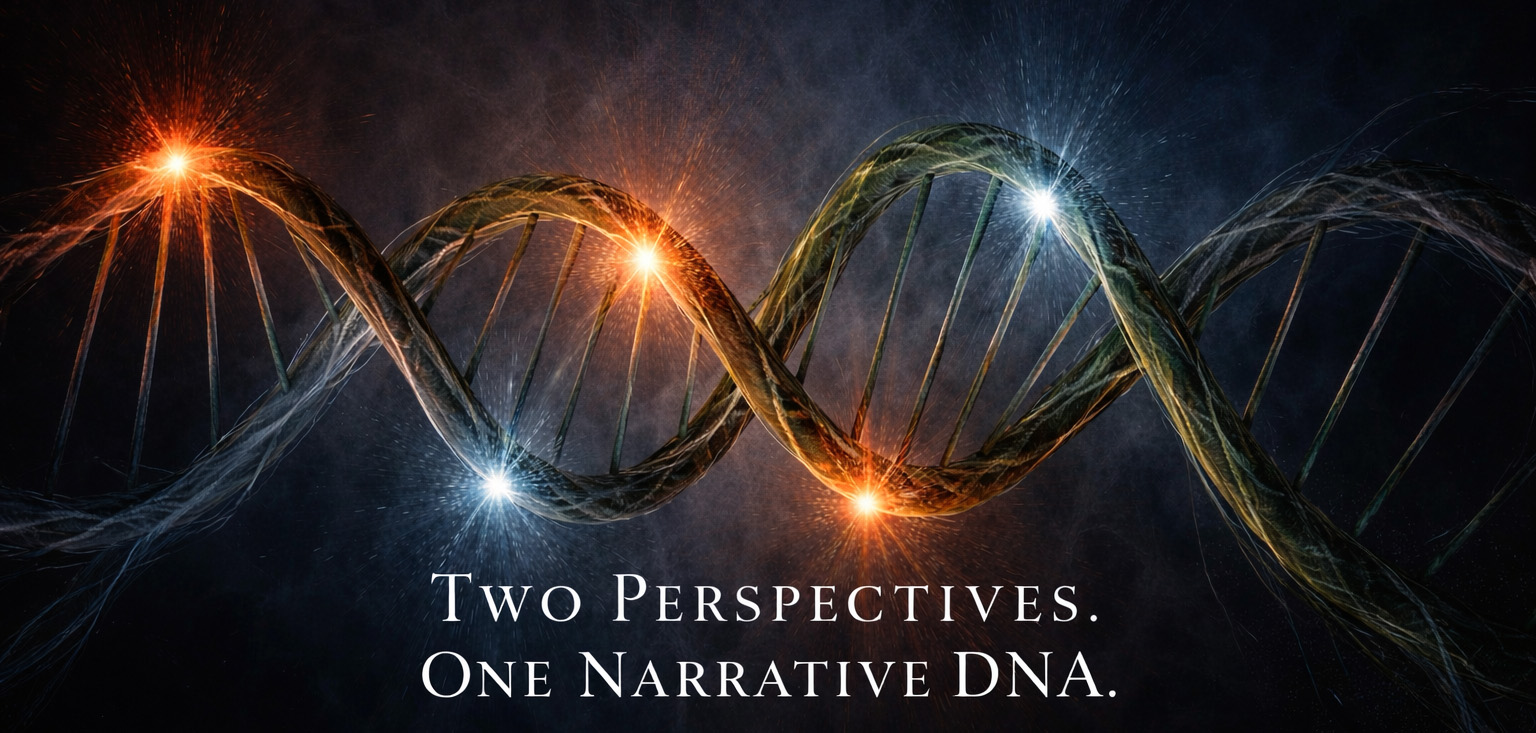
This rule set defines a structural framework intended for full application under the designation The Zeipel Method.
The framework is offered as a tool for narrative construction, not as a stylistic doctrine or competitive standard. Creators may adopt individual principles, reinterpret elements, or draw inspiration from the method in ways that serve their own artistic aims.
A work fulfills The Zeipel Method only when all core conditions are respected. Partial use constitutes inspiration rather than formal application.
Ultimately, the framework exists to deepen story, character, and thematic resonance. If structure becomes an end in itself, its purpose has been misunderstood.
The Zeipel Method defines a complete structural framework.
Its principles may inspire other works, but full application requires adherence to all core conditions..
For comparative context and examples of how other works align with the principles above, see:
The Zeipel Method – Alignment Index